Review: SET-Winter-01-05 Cross Stitch Pattern PD
As an embroidery designer who spends half my life digitizing logos and the other half troubleshooting stitch-outs for small business clients, I approach every new Graphics asset with a critical eye. We are not just stitching for fun; we are building brand identity. When I first opened the files for the SET-Winter-01-05 Cross Stitch Pattern PD, my immediate goal was to determine if this design could transition from a home hobby project to a viable asset for commercial embroidery projects. For boutique owners, Etsy sellers, and local brands, the difference between a cute idea and a profitable product often lies in the technical execution of the design.
First Impressions: Visual Personality and Brand Fit
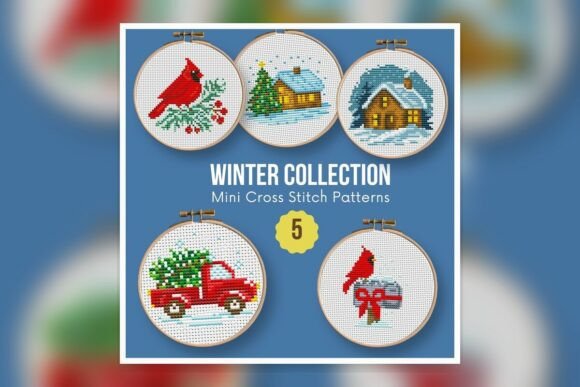
The SET-Winter-01-05 Cross Stitch Pattern PD presents itself as a counted cross stitch design featuring a detailed set-winter-01-05 motif. Visually, the aesthetic leans heavily into the rustic, handmade charm that is currently dominating the small business merch landscape. It feels organic and approachable, lacking the sterile precision of corporate vector art. This is a significant advantage for bakeries, florists, pet brands, and creative studios that want to convey warmth and authenticity.
However, "detailed" is a double-edged sword in our industry. While the intricate nature of the design suggests a premium, high-effort finished product, it raises immediate questions about scalability. Does this level of detail hold up when reduced to a chest logo on a staff uniform? Or does it become a muddy blob of thread? My initial assessment is that this design shines brightest when given space to breathe, making it ideal for tote bag designs or larger back-panel embroidery rather than tiny sleeve accents.
Real-World Applications for Small Business Merch
Let’s move beyond theory and look at how the SET-Winter-01-05 Cross Stitch Pattern PD performs in actual production scenarios. For a local café or bookstore, this design could serve as a standout element on canvas aprons. The textured look of cross stitch complements the heavy cotton or denim fabrics typically used in hospitality uniforms. It adds a layer of artisanal credibility that customers subconsciously associate with quality.
- Embroidered Patches: This is perhaps the strongest use case. By stitching the design onto twill or felt and cutting it out, you create a durable embroidered patch that can be ironed or sewn onto various items. This allows for consistent branding across different fabric types without re-digitizing for each garment.
- Tote Bag Design: Canvas bags provide the perfect grid-like texture that mimics the native environment of cross stitch. The design’s complexity becomes a feature here, offering a rich visual experience that encourages customer engagement.
- Custom Apparel Accents: For boutique clothing lines, using this as a central motif on oversized sweaters or linen shirts can elevate a basic garment into a statement piece. It works well for seasonal collections, particularly in autumn and winter.
- Product Packaging Accents: Small businesses can use simplified versions of this graphic on hang tags or thank-you cards, creating a cohesive visual language between the physical product and its packaging.
Technical Constraints and Careful Considerations
While the artistic merit of the SET-Winter-01-05 Cross Stitch Pattern PD is clear, we must address the technical hurdles. As a digital embroidery file intended for instant download, it is crucial to understand that cross stitch patterns are not always optimized for machine embroidery without adjustment. If you are adapting this for machine use, you must monitor stitch density carefully. High stitch density on a curved surface, such as a cap front, can cause puckering and distortion.
Cap embroidery requires a different approach. The rigid structure of a baseball cap means that fine details can get lost or cause the fabric to pull. If you intend to use this design on headwear, I recommend simplifying the outline and reducing the number of color changes. Similarly, for items that undergo frequent washing, such as work shirts or kitchen aprons, the integrity of the stitch-out is paramount. Complex, long stitches are prone to snagging. You must ensure that the tie-offs are secure and that the design does not have excessive jump stitches that could unravel over time.
Another critical factor is fabric texture. On smooth, high-thread-count fabrics, the pixelated nature of cross stitch can look jagged if not properly stabilized. On textured fabrics like wool or heavy linen, the design blends in more naturally. Always test on real fabric before committing to a full production run. Dark uniforms present another challenge; if the design relies on light thread colors, you may need to add an underlay or choose a lighter garment color to ensure visibility and contrast.
Impact on Brand Identity and Customer Trust
In the world of handmade products, consistency is key to building trust. Using a distinct graphic like the SET-Winter-01-05 Cross Stitch Pattern PD helps establish a recognizable brand identity. When customers see this specific aesthetic across your social media, your website, and your physical products, it reinforces professionalism. It signals that attention to detail is a core value of your business.
Furthermore, the "handmade" perception adds value. Even if the item is machine-produced, the cross stitch style evokes the labor of love associated with traditional crafts. This emotional connection can justify a higher price point for your custom apparel and merchandise. It transforms a simple tote bag or hat into a collectible item. For Etsy sellers, this visual consistency improves buyer engagement, as shoppers are more likely to remember and return to a shop with a strong, cohesive visual style.
Practical Notes for the Embroidery Designer
Before you integrate this design into your commercial embroidery workflow, here are my essential recommendations:
- Test in Black and White: Before selecting thread colors, print or stitch the design in monochrome. This helps you evaluate the clarity of the shapes and ensures the design is readable without relying on color contrast.
- Check Scalability: Verify if the design works at small patch sizes. If the details merge together when scaled down, you may need to simplify the graphic or reserve it for larger applications.
- Review Thread Color Contrast: Ensure there is sufficient contrast between adjacent colors. Low contrast can make the design look muddy from a distance.
- Confirm Hoop Size: Check the dimensions of the design against your available hoop size. Do not attempt to cram a large design into a small hoop, as this will compromise registration and stability.
- Use Proper Stabilizer: Given the potential density of cross stitch styles, use a cut-away stabilizer for stretchy fabrics and a tear-away for stable wovens. This prevents distortion during and after stitching.
- Create a Printable Mockup: Use design assets to create a printable mockup for client approval. This saves time and materials by allowing the client to visualize the finished product before you stitch a single thread.
- Verify Licensing: Since this is a PDF for instant download, confirm the commercial licensing terms. Ensure you have the right to use the design for physical goods you intend to sell. Do not assume; read the license included with the Cross Stitch Patterns.
In conclusion, the SET-Winter-01-05 Cross Stitch Pattern PD is a versatile asset for the right application. It offers a charming, rustic aesthetic that aligns perfectly with current trends in small business merch. However, its success depends on thoughtful adaptation to the constraints of embroidery production. By respecting the limits of stitch density, fabric texture, and scale, you can transform this digital file into a powerful tool for brand building. Whether you are creating branded patches for a local brewery or designing a signature line of tote bags for a florist, this design has the potential to add significant value to your finished product. Just remember to test, stabilize, and verify your rights before going to production.